Bronze in Naval and Marine Applications
- Marine equipment
- Propellers
- Impellers
- Pumps
- Shafts (propeller shafts)
- Nuts
- Port hole rings
- Transducer nuts
- Ornamental fixtures
- Submarine/Torpedo parts
- Ship trimmings
- Marine hardware
- Bushings and bearings
- Rudders
- Clamps
- Marine engine parts
- Ship building (in general)
- Valves (in contact with sea water)
- Flanges
- Elbows
- Pump bodies
- Marine components
- Outboard motor components
- Turnbuckles
- Bolts
- Lock washers
- Screws
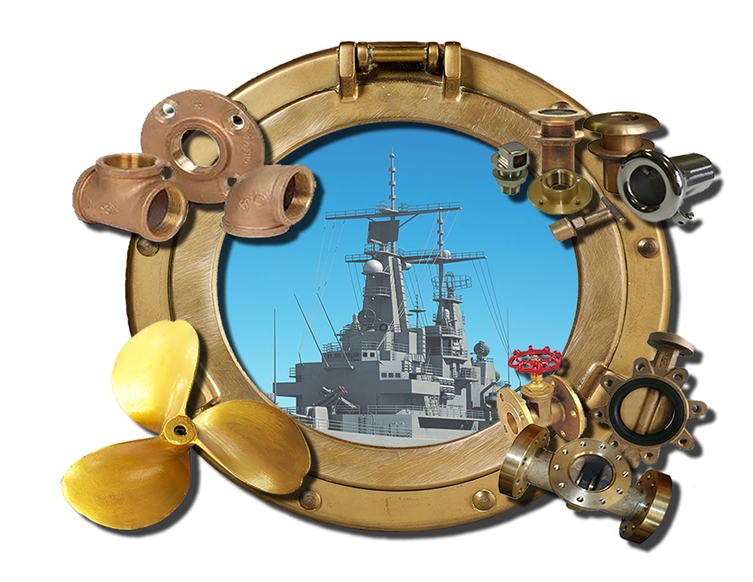
As you can see bronze hardware is used in many marine applications; from simple screws to major components like propeller shafts. In most cases, what makes bronze good in these environments is its corrosive resistance. We provide replacement boat parts in bronze for marine applications along with repairs all over the world. We can supply bronze marine hardware like standard bars but also have items made to your print
Marine Bronze Alloys and Why They Resist Corrosion
Bronze is a copper alloy, traditionally a combination of copper and tin, and it has long been a popular material for marine and naval work. The reason comes down to corrosion resistance: in salt water, the corrosive effects that quickly attack steel and many other metals act far more slowly on copper-based alloys. Bronze also resists biofouling, so algae and marine growth build up less readily on bronze fittings than on many competing materials.
Several bronze and brass alloys show up frequently in marine applications, each with its own balance of mechanical properties, corrosion resistance, and cost:
- Aluminum Bronze: Uses aluminum as a primary alloying element for high resistance to corrosion along with strong mechanical properties, a common choice for pumps, valves, and structural components exposed to seawater.
- Nickel aluminum bronze: Adds nickel to the aluminum bronze family for even greater durability and good corrosion resistance, widely used for propellers, shafts, and bearings.
- Manganese Bronze: A high-strength copper-zinc brass alloy (with small amounts of manganese, aluminum, and iron) valued for its tensile strength in heavily loaded marine fittings.
- Silicon Bronze: Combines copper with small amounts of silicon for good corrosion resistance and excellent welding and fabrication behavior, often chosen for fasteners, tubing, and marine hardware.
- Naval brass: A brass alloy of copper and zinc with a little tin added to improve resistance to seawater corrosion, a corrosion-resistant material used widely across marine fittings.
Because these copper alloys can be cast and fabricated into many shapes and forms — from bars and tubing to springs, instruments, and finished marine components — bronze and brass remain go-to materials across shipbuilding and related industries.
Unlike steel, they resist pitting and the corrosive effects of saltwater while keeping a favorable strength-to-weight balance, which is why bronze is installed so frequently throughout naval and marine equipment.
Call 800-478-0887 for any questions regarding our marine brass hardware or to speak to one of our sales reps or click here to complete our online form.
|